Originally published on World Pheasant Association (WPA) News 120 (Spring 2023).
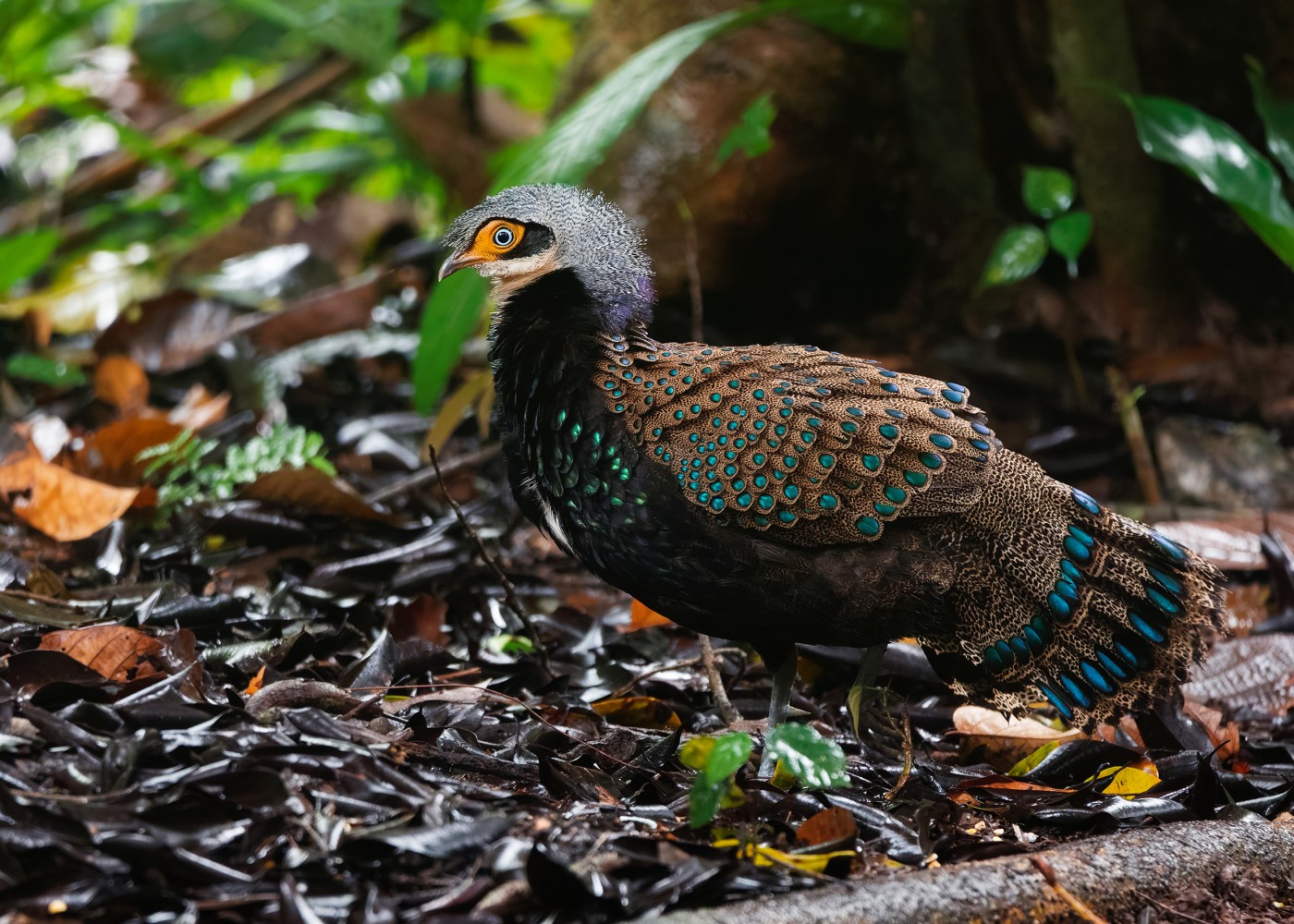
Bornean Peacock-Pheasant (Polyplectron schleiermacheri) is one of the most enigmatic pheasants in Asia. As the name suggests, it is endemic to Borneo where it was historically found in lowland forests across the island. However, there are only few records in the recent decades coming fromsmall areas in Sabah and Kalimantan. It had probably never been photographed in the wild until last year (2022). A pair ofmale and female was repeatedly captured by a camera trap that was set in the forest near Tangkulap Forest Reserve in Sabah. With strong dedications froma local birder and villagers, a hide was set up at the area where the birds were frequently seen. Throughout the later half of 2022, the birds were observed and photographed on regular basis by many birders who visited the hide. The pair also produced one offspring in 2022 of which the female frequently brought along. I recently had an opportunity to visit the hide in late February 2023, which resulted in one of the best experiences that I’ve had in Sabah.
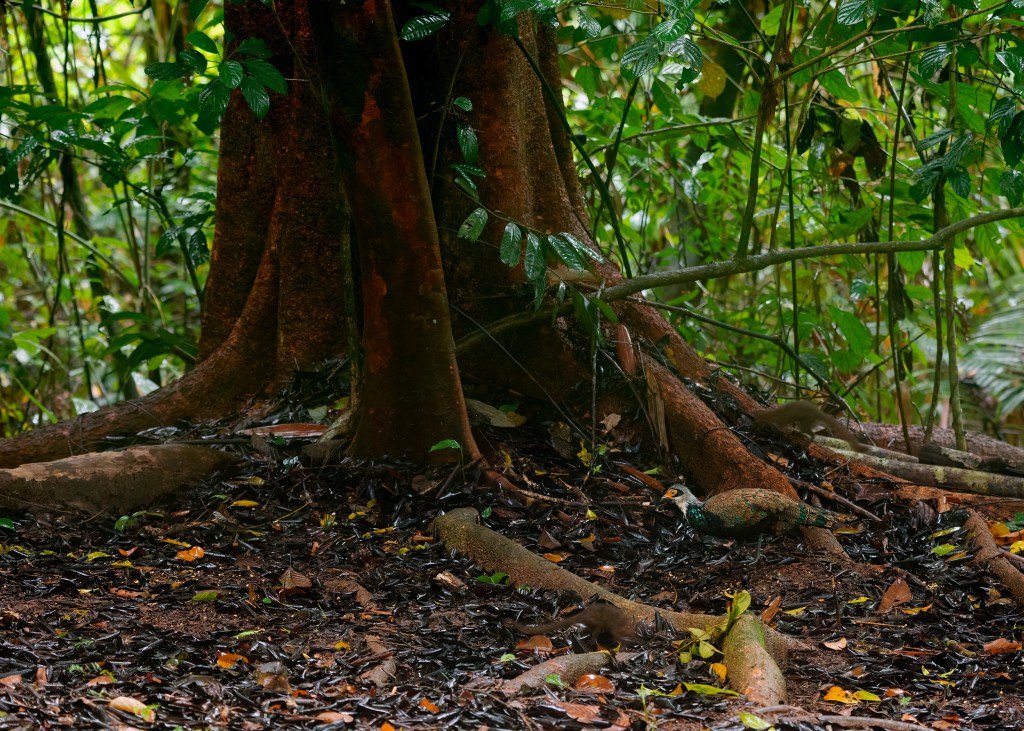
Our journey to see the peacock-pheasant started in early morning of 26 February 2023. We met up with a local guide who would lead us to the hide. We were told that it would be quite a trek uphill to where the hide is located, and it turned out to be true. We spent roughly one hour walking and climbing up the hill. The weather wasn’t particularly helpful as it rained heavily the night before and the trail was muddy and slippery. We were all quite exhausted once reaching the hide, but still full of hope to see the rare peacock-pheasant. After settling ourselves and getting our cameras ready, we waited patiently for any sign of the peacock-pheasant. Unfortunately, it began to rain almost immediately after we settled down. There was nothing we could do except waiting for the rain to stop. There were briefmoments when things began to look slightly more promising. A White-crowned Shama, amale Siberian Blue Robin, few other bulbuls, squirrels and tree shrews showed up at the hide, but there was still no sign of the peacock-pheasant. Then it began to rain even heavier for most part of the afternoon.
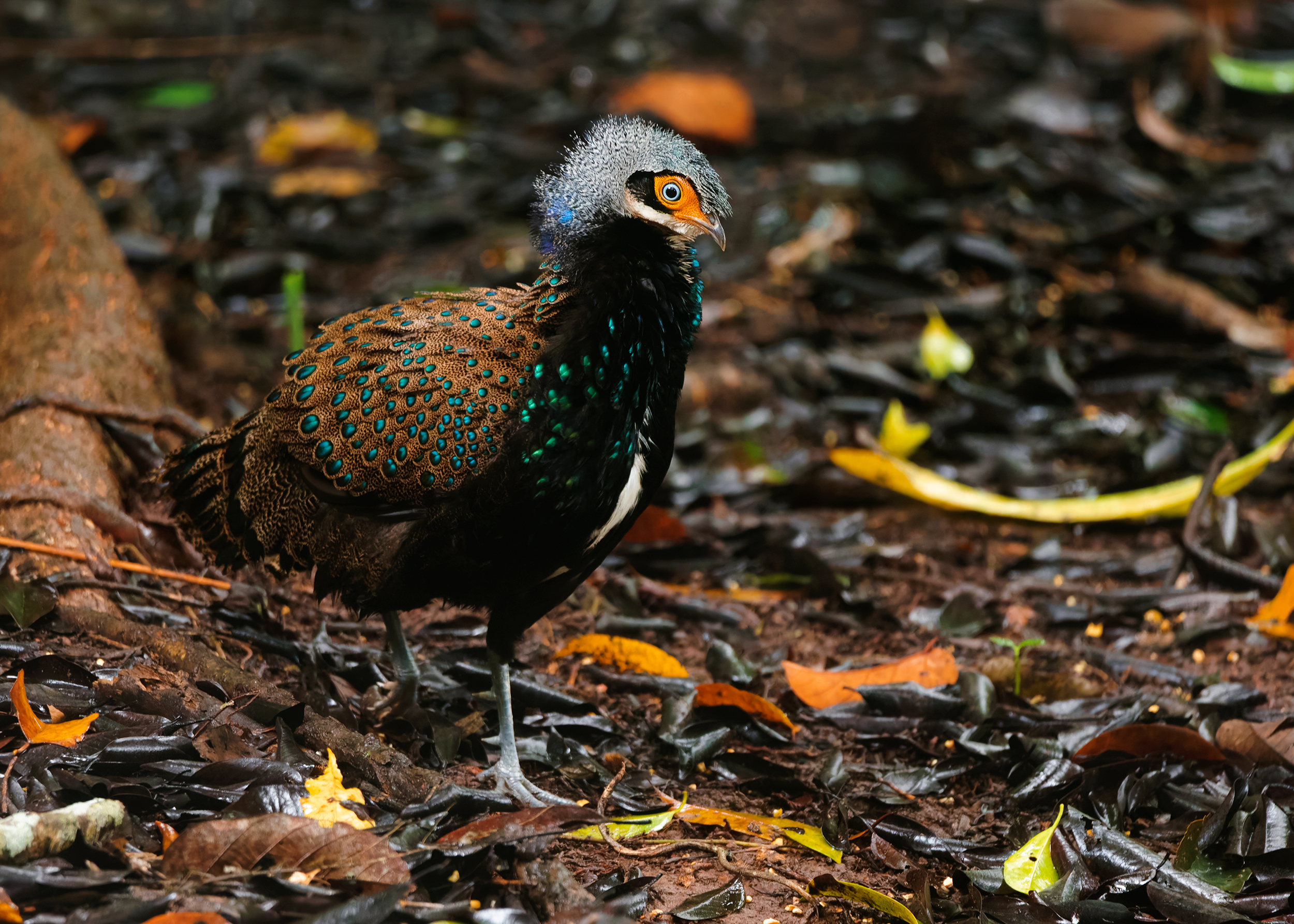
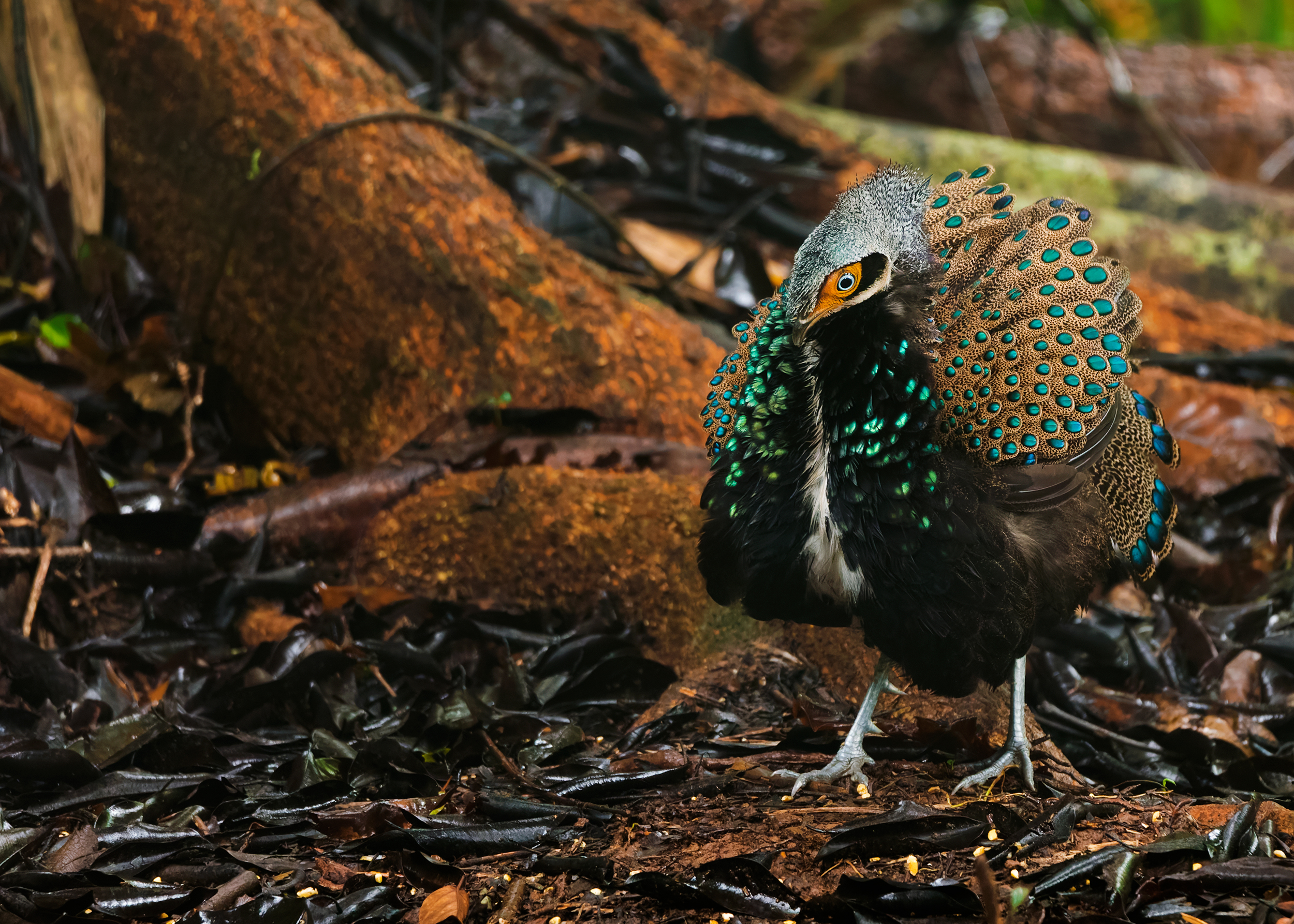
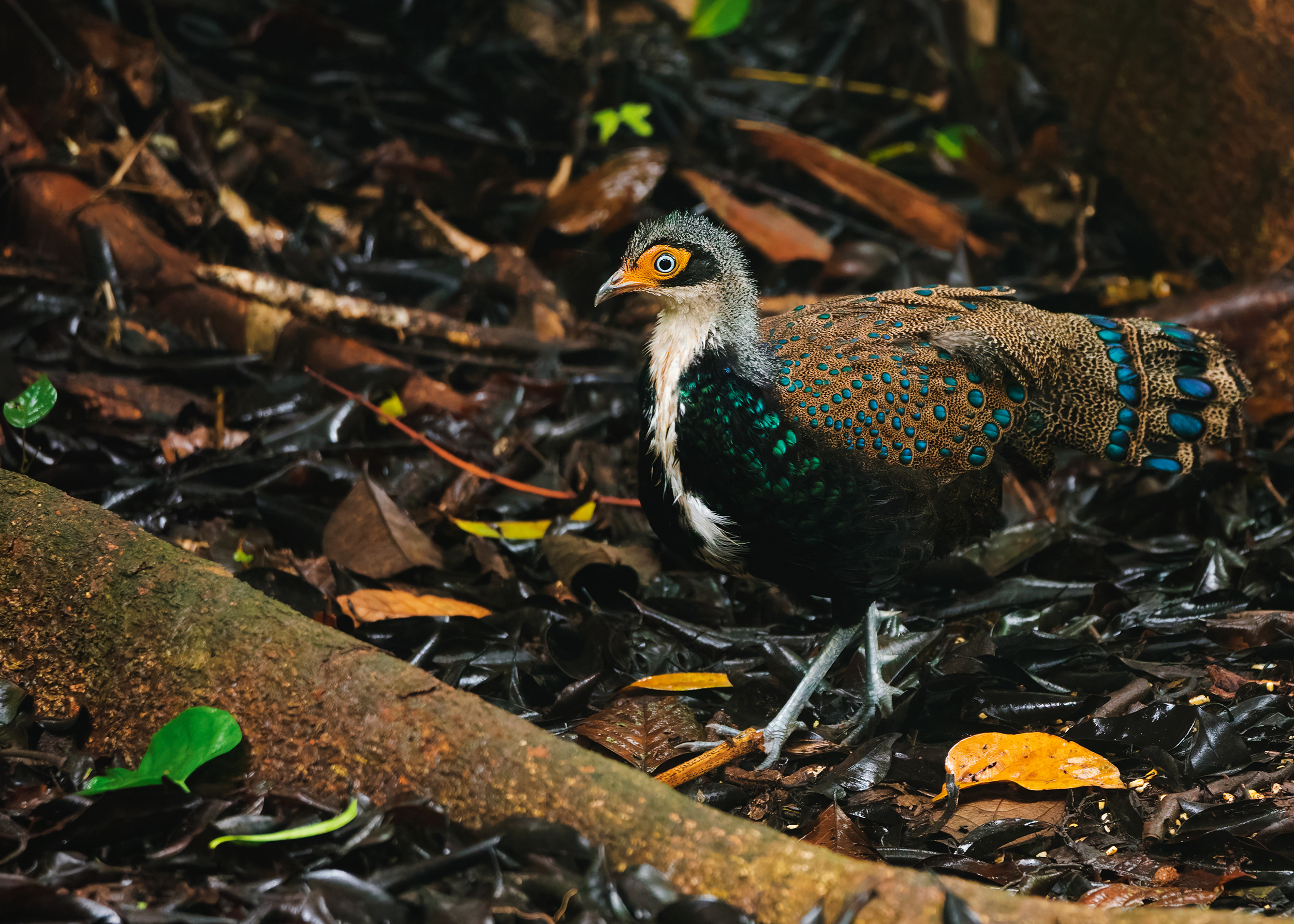
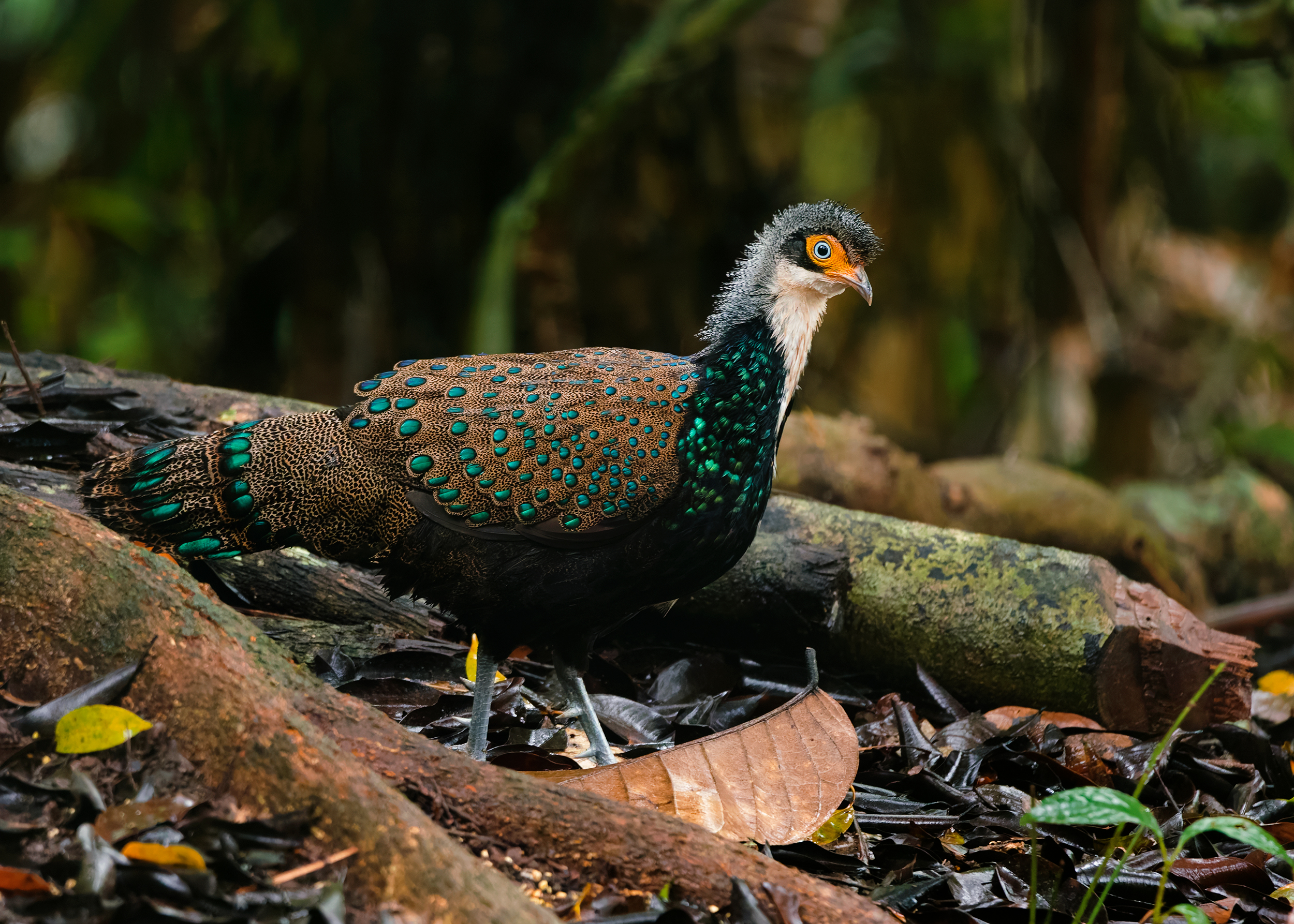
I have to admit that I nearly gave up hope of seeing the peacock-pheasant on that day, and I guess it was the same for everyone. By 4pm, we were already discussing about walking back to the village. I suggested that we waited for a bit as the rain seemed to be stopping and, for the first time, we could see a hint of sunlight. By 4.30pm, there was still no sign of the peacock-pheasant and even though the rain had already stopped, the forest actually became dark and misty. Some of us were already beginning to pack our bags, when the local guide whispered loudy and repeatedly with excitement “peacock-pheasant!”. I quickly scanned through the dark forest floor and there it was, a male Bornean Peacock-Pheasant standing motionlessly on the left side of the forest clearing in front of the hide. It seemed a bit nervous but decided to reveal itself into the open after a while. My first impression of the bird was that it was smaller than I thought. The crest was tiny and the whole body was much slenderer than I expected. It later disappeared into the thick undergrowth after a few minutes. The local guide told us to wait as it might still return, and it did! This time it seemed much more relaxed, then something totally unexpected happened, a female showed up. As soon as the female arrived, we witnessed a jaw-dropping transformation of the male from a small thin bird that we saw at first into a totally stunning peacock-pheasant in display. During the transformation, the male stood completely still while puffing up the feathers slowly, showing all the iridescent green ocelli on the wings and tail, as well as expanding the crest which was completely concealed at first. The final stage of display was when the male fluffed up its whole body then jumped and fully fanned its tail forming a circle. Unfortunately, with the extremely limited shutter speed (I was mostly shooting at 1/5 – 1/10 sec!), I couldn’t get a photo of it in full display. However, that moment was forever imprinted inmy mind. The female seemed much more nervous than the male and wouldn’t reveal itself in the open.
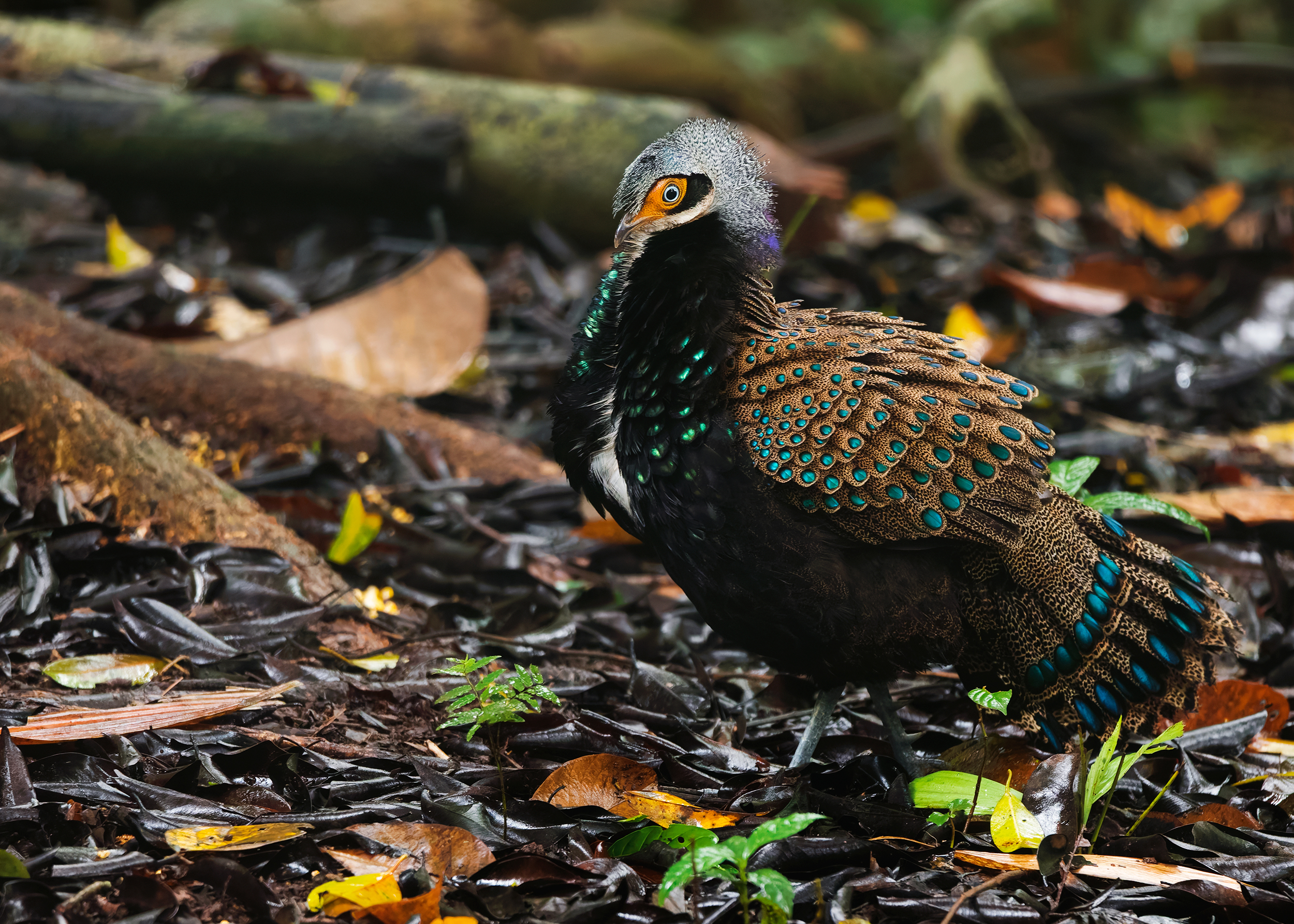
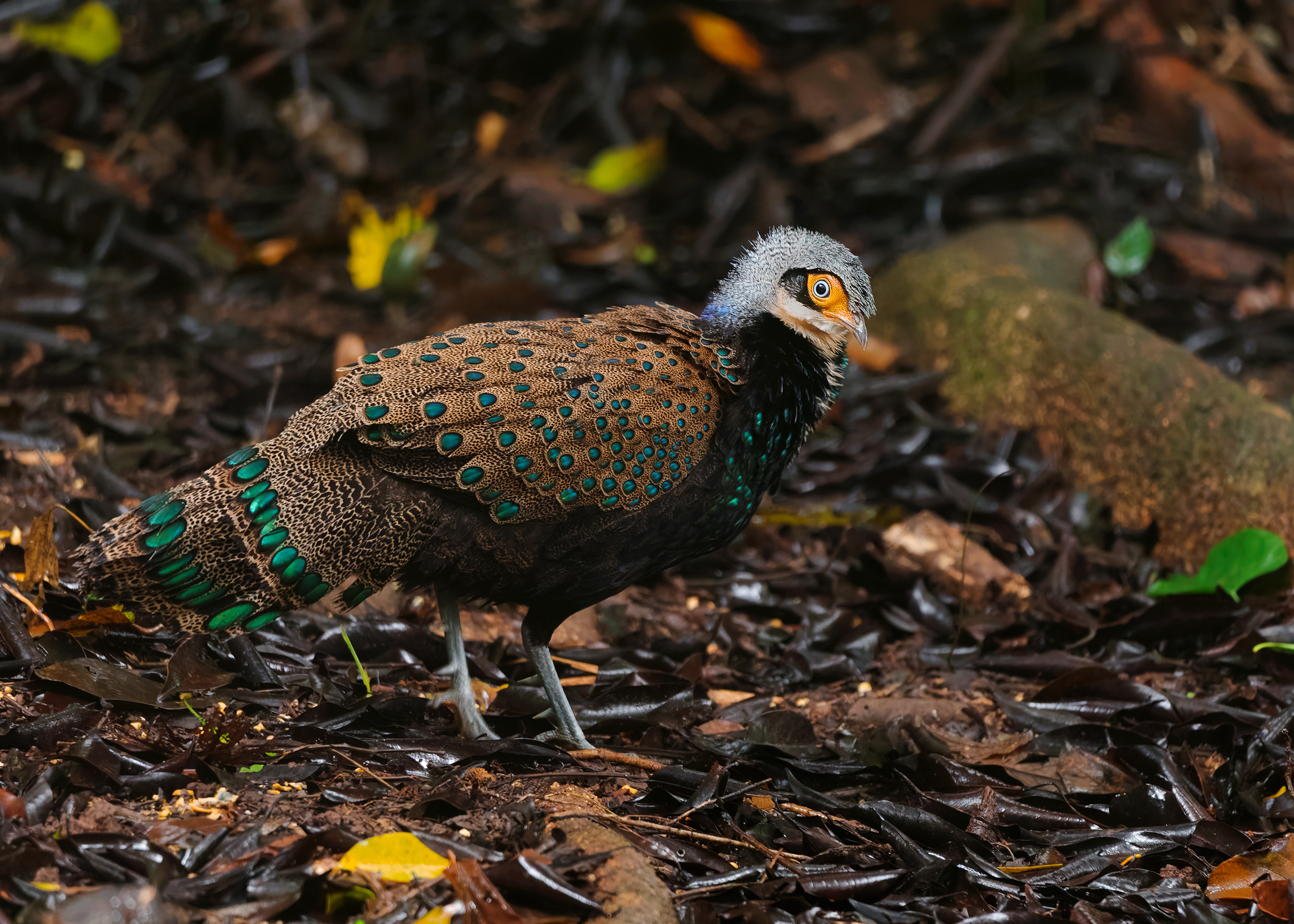
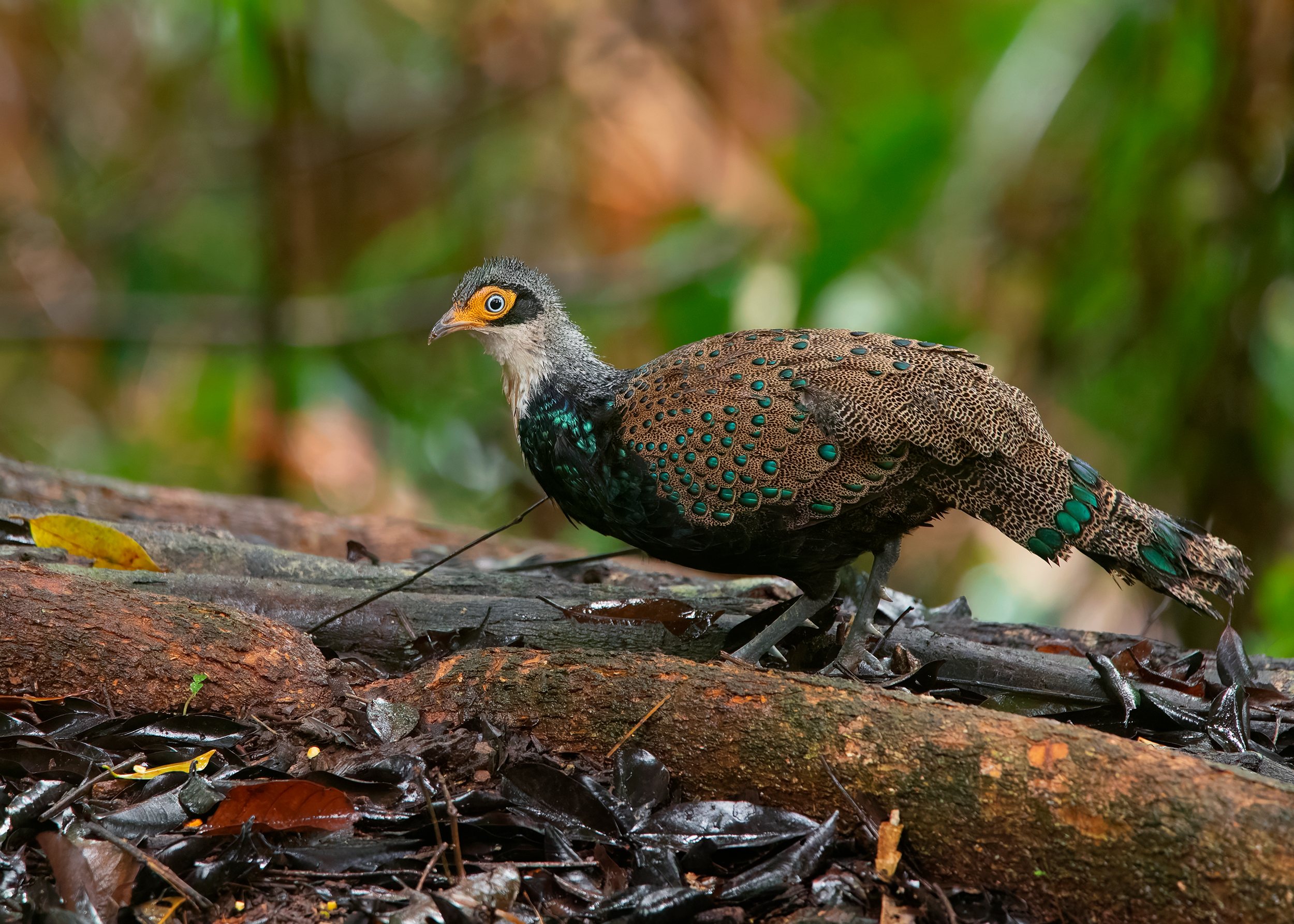
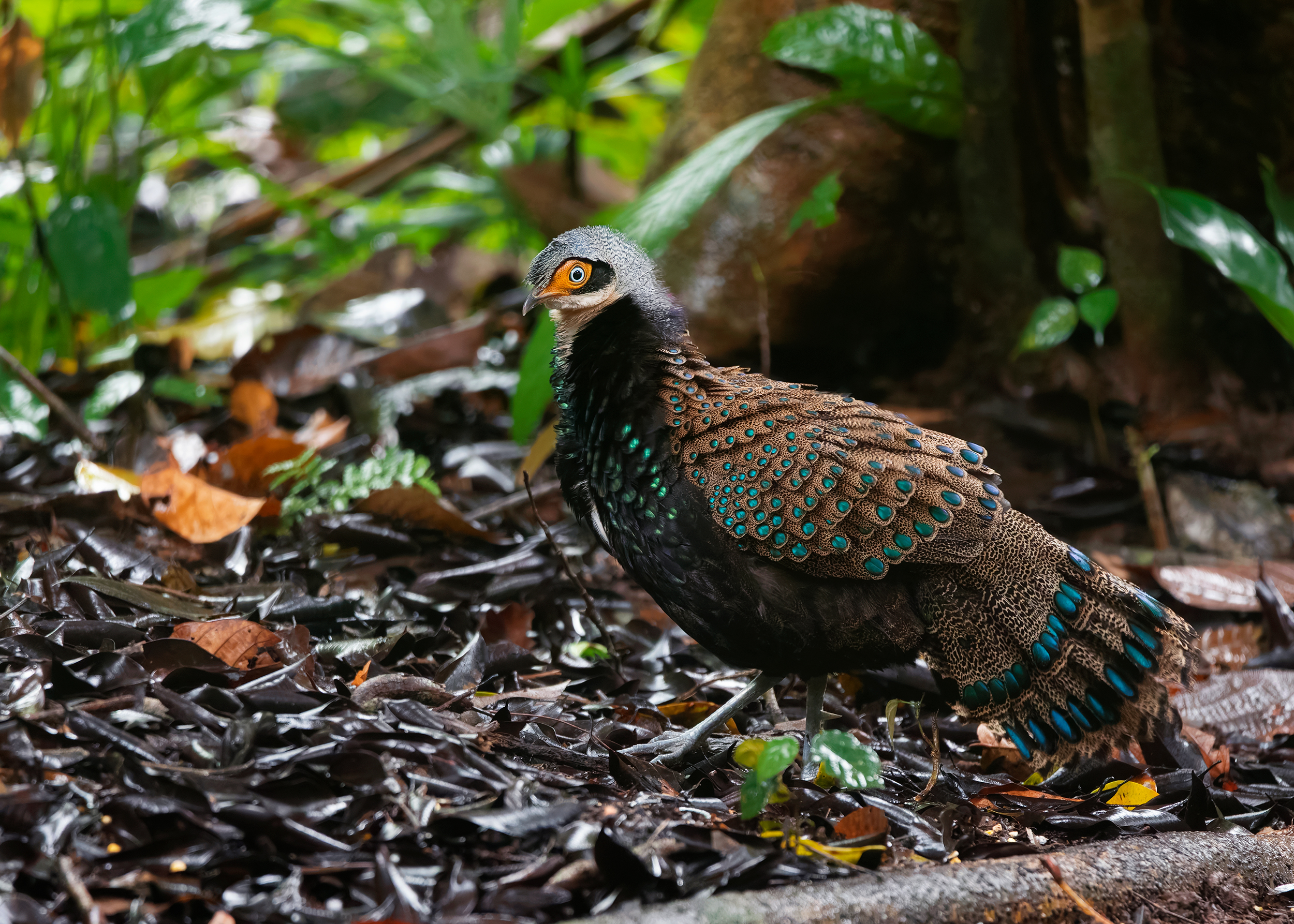
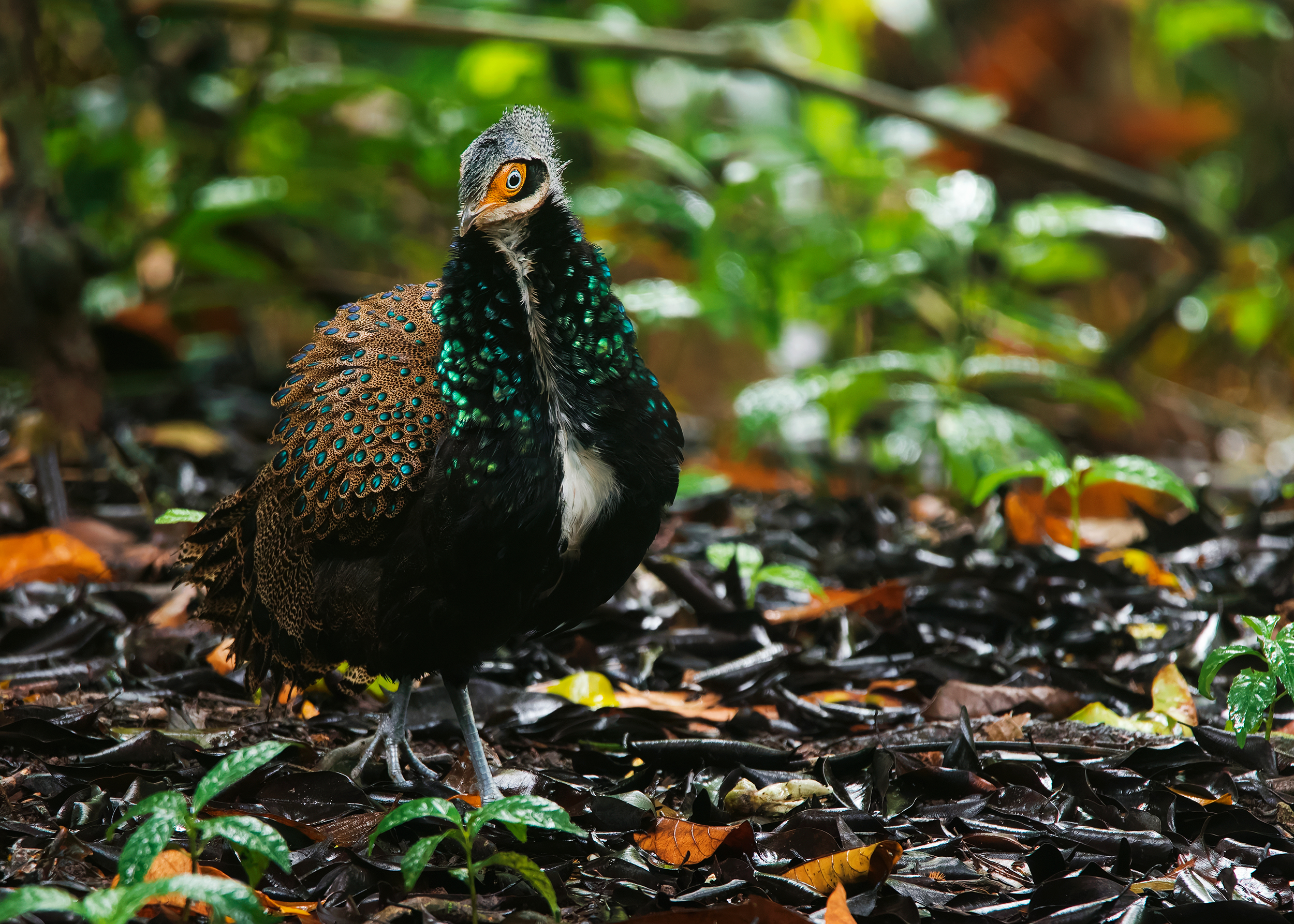
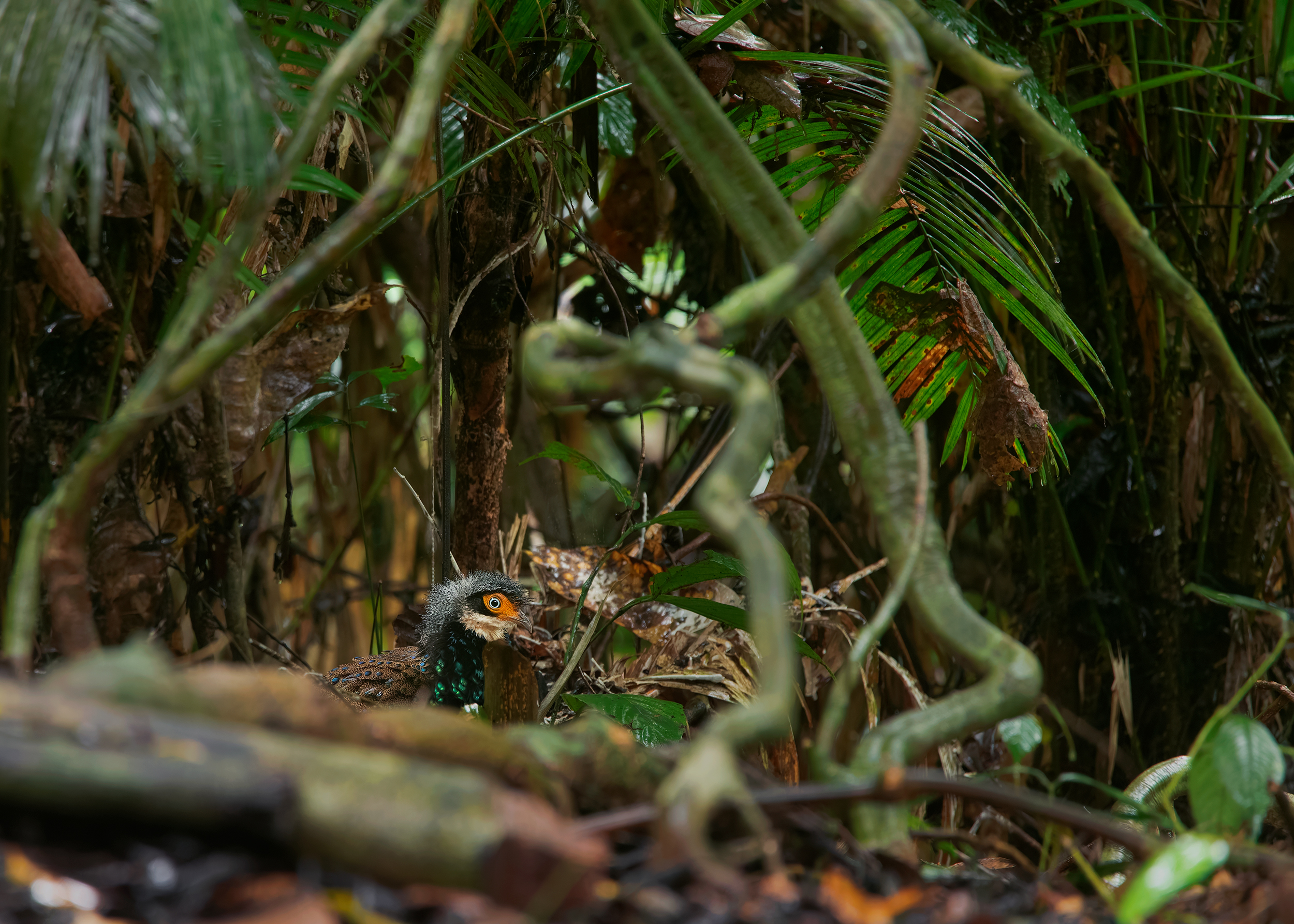
After nearly half an hour, the birds disappeared into the dark forest leaving us in awe and sheer happiness. It began to drizzle on the way back, and the small streamthat we crossed in the morning had become knee-deep and extremely fastflowing, but we were all filled with happiness and didn’t mind those obstacles at all. I can say that our trip to see the peacock-pheasant was much more successful than I expected. Even though we had to endure sitting quietly in the hide for longer than six hours, our patience was finally rewarded with a once in a lifetime experience that I will never forget.


Leave a Reply