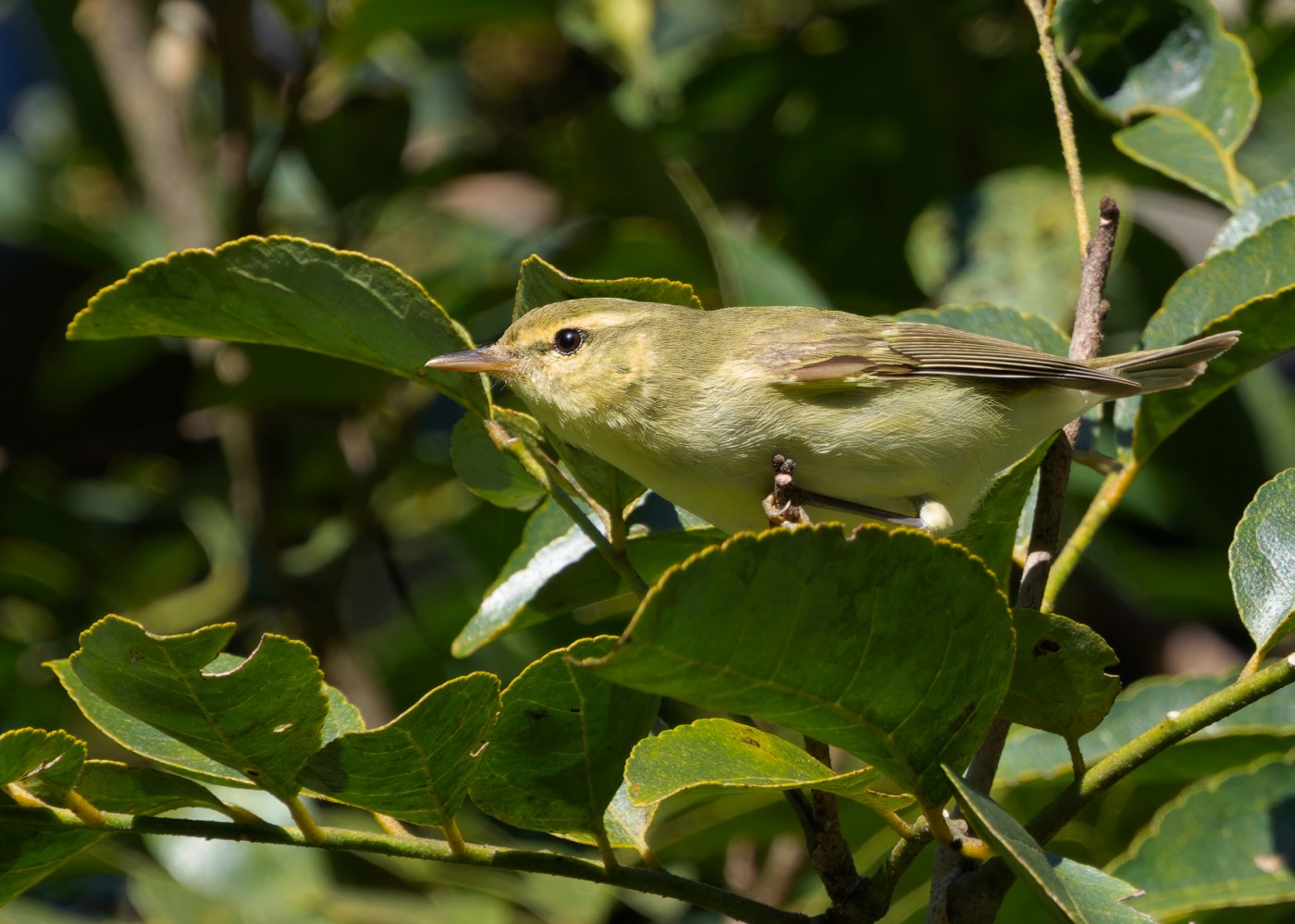
Back on 21 December 2023, I was birding in Khao Yai National Park with Wayne Paes and Andy Last. As we stopped for birding near Chao Pu Khao Khieo Shrine on the way up to Khao Khieo summit, I noticed a Phylloscopus warbler feeding in the canopy level of a tall open tree. I watched it with my binoculars and remembered being puzzled by how unusual it looked. I was already quite certain that it was a member of either Greenish or Arctic Warbler Complex, but it was obviously more yellowish than anything that I had seen. Other Phylloscopus complexes could be ruled out by the lack of dark crown stripes, rump patch, and pale tertial tips, as well as having just a faint greater covert bar. I was already aware of the possibility that Green Warbler (Phylloscopus nitidus) may also occur in Thailand, so I quickly grabbed my camera and tried to get as many record shots as possible. However, the bird soon disappeared and did not give any call while we were observing it. Japanese Leaf Warbler (P. xanthodryas) would be another possibility but the structure did not fully match with the bird that I observed I would expect a member of the Arctic Warbler Complex to be more robust with a larger bill, longer wings, and short outermost primary.
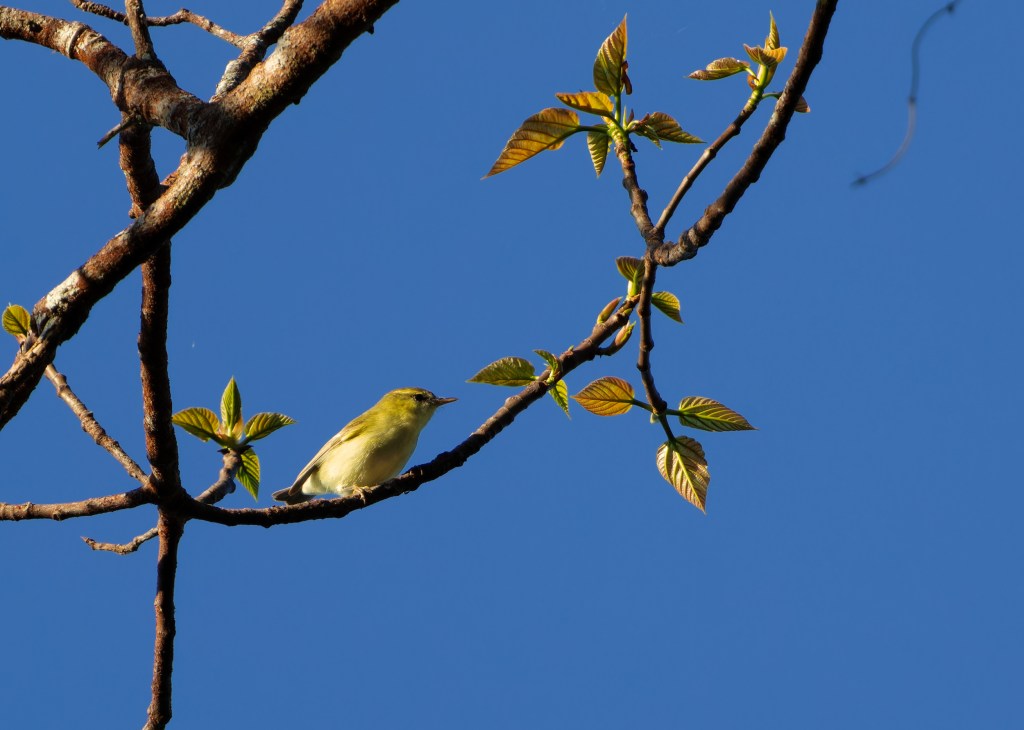
On the same day, I met a young Thai birder, Sarawin Kreangpichitchai, and told him about this unusual bird. He then spent the following morning trying to relocate it. Fortunately, the bird was found again near the original location and Sarawin was able to obtain both photographs and sound recordings of the bird’s calls, which could immediately confirmed that it was indeed a member of the Greenish Warbler Complex. His photos and audio of the bird can be accessed here https://ebird.org/checklist/S156839063.
I was still birding around Khao Yai National Park, so after hearing the news, I quickly joined him to see the bird again for the second time. This time, the bird appeared to be more vocal and even came down to feed in the middle storey near the shrine. Both me and Wayne Paes were able to get more photos of the bird, as well as a recording of the calls.
The identification of the bird was then discussed widely on a Facebook forum. The call alone could rule out any other Phylloscopus complexes, leaving only 3 possibilities, the Greenish, Green, and Two-barred Warbler. At Khao Yai National Park, the Two-barred Warbler is the most common member of the complex, while the Greenish Warbler is scarce, but common and widespread in higher elevations in northern Thailand. This particularly bird that I found appeared to be much more yellowish than both Two-barred and, especially, Greenish Warbler. It has relatively bright yellowish olive crown and upperparts with obvious yellowish wash on the face, supercilium, and breast sides. The lower mandible is also largely pale yellowish-pink with just a hint of dusky wash towards the tip, not as obviously dark as in typical Greenish Warbler. The wing bar is also shorter and fainter than in Two-barred Warbler, lacking any pale tips towards the upper greater coverts. The bird was then accepted as the first Green Warbler for Thailand and Southeast Asia.
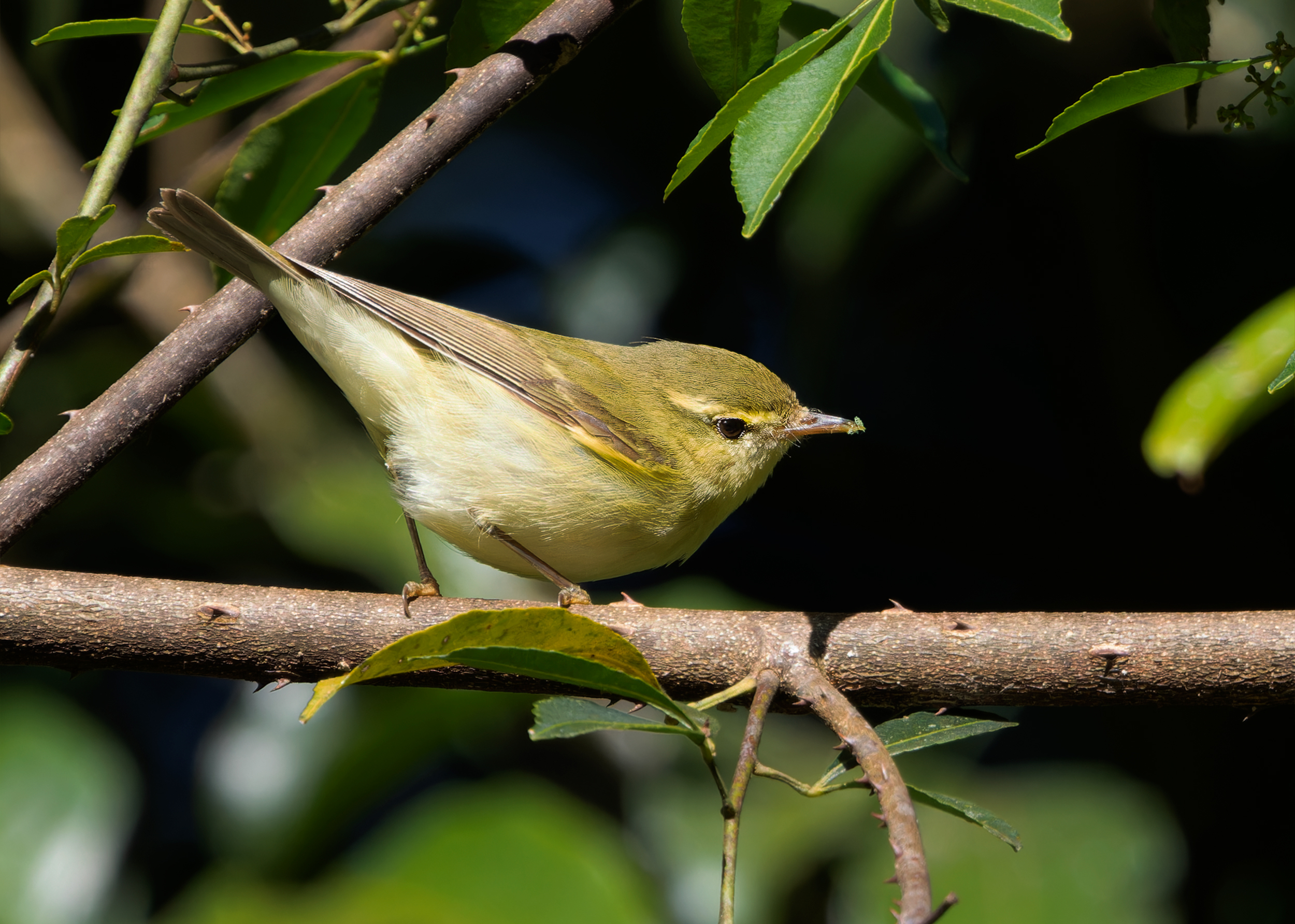
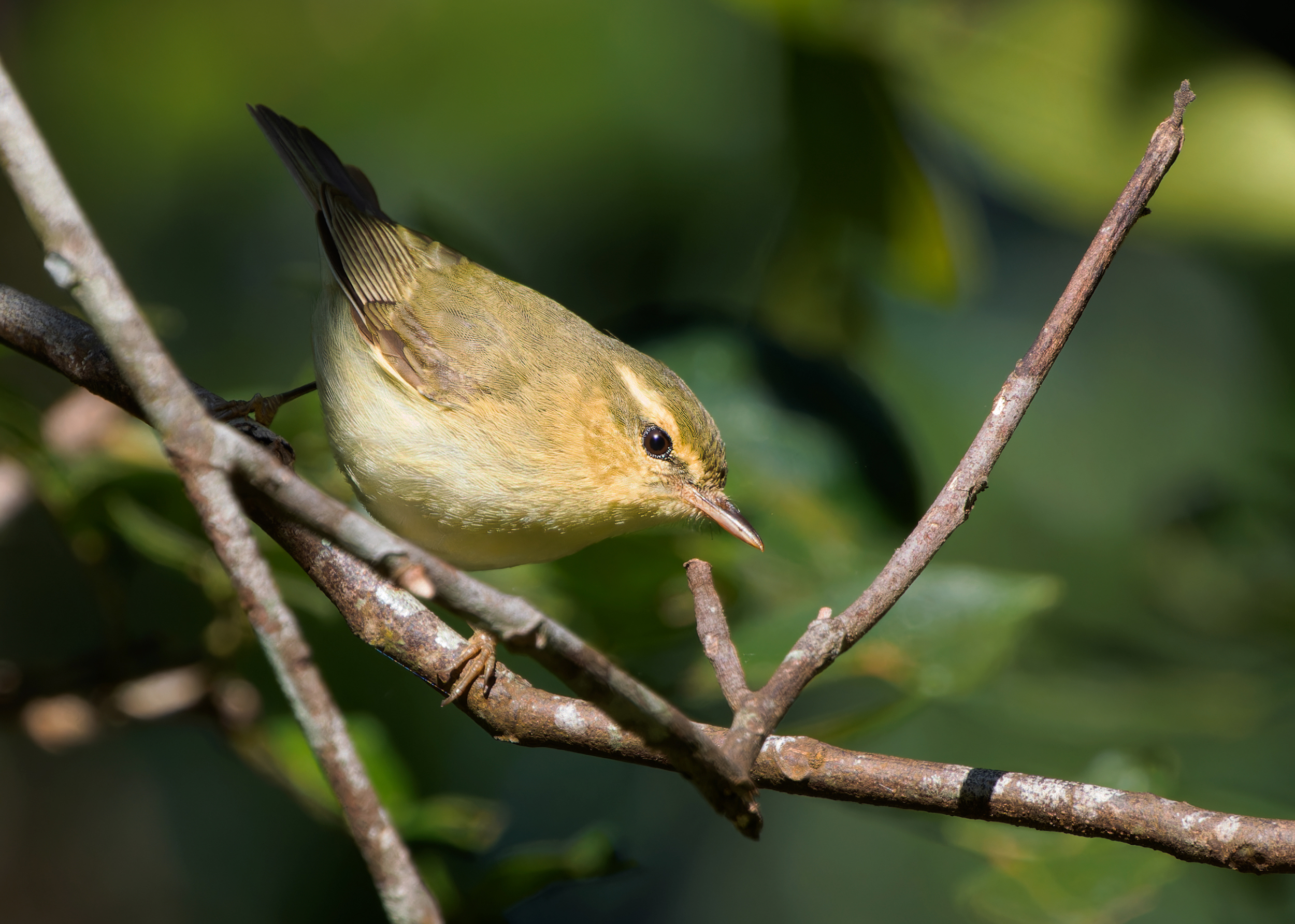
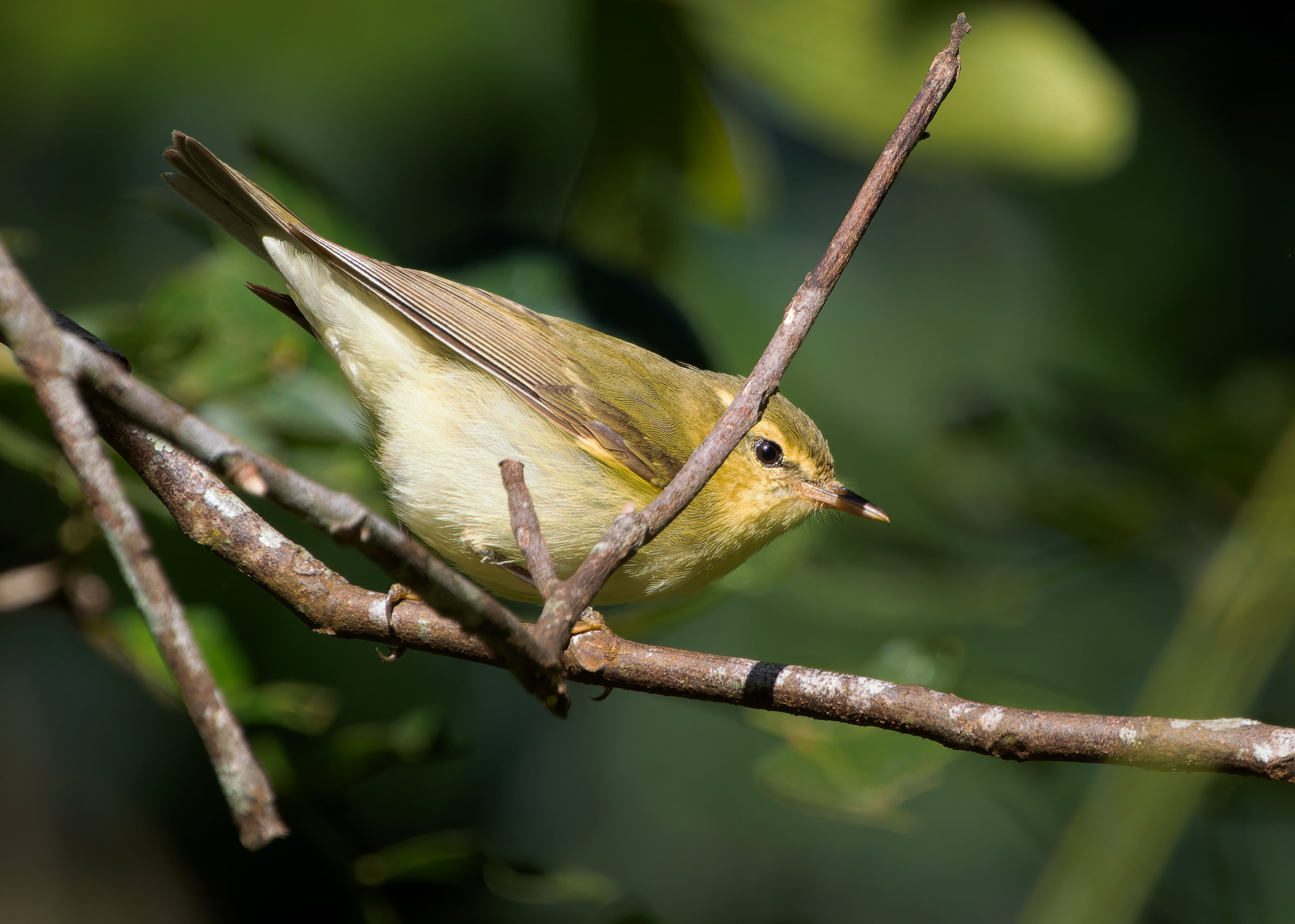
Interestingly, just 2 days after my initial sighting, another Green Warbler was found at Pum Peng Reservoir in Doi Lo District, Chiang Mai on 23 December 2023 by Mayoh De Vleeschauwer, another young and keen birder from Chiang Mai. The identification was based on the overall bright yellowish-olive plumage, short and thin greater covert bar, and vocalisation. Photos and audio of the second bird can be accessed here https://ebird.org/checklist/S156917214. I also made a visit to see the second bird on 1 January 2024, but only managed to get some brief glimpses and poor record shots.
The bird that I found at Khao Yai National Park remained to be seen around the same area until at least 22 January 2024, while the bird at Pum Peng Reservoir was last seen on 5 January 2024. It was such an interesting winter for this species in Thailand. However, it has already been 3 years since these sightings, and so far no other Green Warbler has been found in Thailand. I suspect that there was an influx of this species into Southeast Asia during the winter of 2023-2024 possibly due to an unusual weather pattern which caused them to migrate further eastward than usual. The Green Warbler breeds in high-altitude forest, principally of beech (Fagus), oak (Quercus) or juniper (Juniperus) with well-developed layer of undergrowth, or conifers mixed with some deciduous trees with alder (Alnus) in the Caucasus mountains from Turkey to northern Iran. The main wintering ground of this species is in southern India and Sri Lank, but it has also been recorded from eastern parts of India.


what a great find..
what a great find..